With twelve people, a functioning SaaS product, and a growing customer base, your startup is moving in the right direction. People take security seriously, though no one has “compliance manager” in their job title. One day, a potential enterprise customer asks for a SOC 2 report.
So where do you start?
Grabbing dozens of policies immediately is not the first step for founders researching how to get SOC 2 certification. A handful of choices determines what your company needs to document, implement, and prove, and that is where to start.
Decide What Your First SOC 2 Audit Should Cover
SOC 2 evaluates controls against the AICPA Trust Services Criteria. Security, Availability, Confidentiality, Processing Integrity, and Privacy are the categories they cover. Only Security is mandatory. Whether the other categories are included depends on whether they’re relevant to the organization’s services and commitments. If a startup is running a straightforward business application, beginning with Security alone can work, provided that scope meets customer expectations.
Before you collect any evidence, identify the applications, infrastructure, employees, and service providers involved. Making the scope overly broad adds extra work, and it doesn’t necessarily increase the report’s value.
Type 1 vs. Type 2? Let the Deadline Decide
There are two reporting options for anyone searching for how to get SOC 2 certified. Type 1 evaluates the design of controls as of a specified date. Type 2 goes further, examining both design and operating effectiveness throughout a defined period. Type 1 may be a useful starting point when an enterprise customer needs evidence fast, provided the customer accepts it.
For businesses investigating how to get SOC 2 type 2 certification, the process includes an observation period, commonly three to twelve months, followed by an independent examination. Type 1 isn’t a mandatory prerequisite for Type 2. Check your customer’s requirements before paying for either examination.
Fix Everyday Security Gaps First
Tying security controls to ordinary business activities helps make SOC 2 preparation more manageable. For instance, enforce multi-factor authentication for important accounts, create a documented employee offboarding process, and review access permissions on a regular basis.
Evidence of production changes and approvals should be kept by development teams. Record risk assessments and relevant supplier reviews at the management level. What employees actually do needs to be described in the policies. There is limited value in a polished procedure that no one follows.
Collect Evidence While Things Are Happening
SOC 2 for saas companies means demonstrating that relevant controls exist and, for Type 2, operate consistently. An auditor may well ask about when a former employee’s access was removed or whether a production deployment received appropriate approval.
It’s easier to gather these records as activities occur than to reconstruct them months later. Small teams that need help can organize this work with CertAssist’s built-in controls, editable policy templates, evidence checklists, and document storage.
No direct integrations with company systems are required. Evidence is uploaded by the team, and auditors can be provided with read-only access.
Why SOC 2 Requires an Independent Auditor
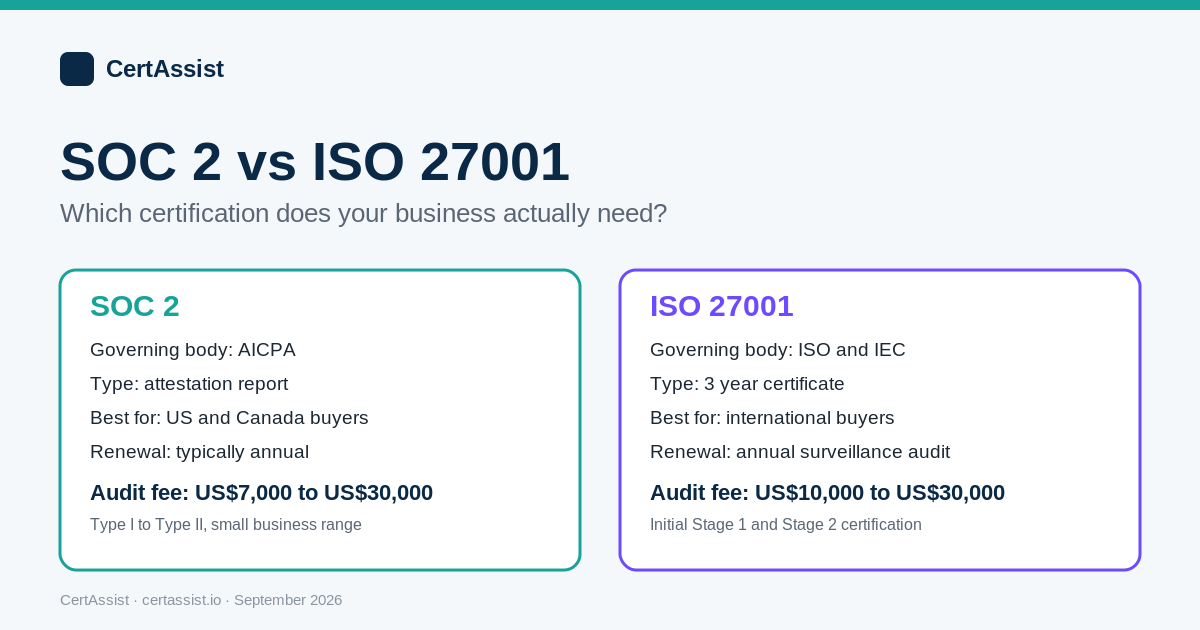
Strictly speaking, SOC 2 is an attestation rather than a certification. A licensed CPA firm conducts the examination and issues the SOC 2 report. Compliance software can help prepare and organize evidence, but it cannot replace the independent auditor.
On the software side, CertAssist offers a US$225 monthly promotional subscription that covers SOC 2, ISO 27001, and its other supported frameworks. Audit fees are charged separately. An auditor’s quote reflecting your business size, selected criteria, and intended reporting period should come first.
Keep the Process Manageable After Your First Report
A completed SOC 2 examination shouldn’t mark the end of your security activities. Team members join and leave, applications change, and new suppliers become part of your operations. Controls must stay relevant.
Make sure each responsibility has a clear owner, evidence is retained throughout the year, and documented procedures are reviewed periodically against reality. For a growing startup, that discipline makes future examinations easier while supporting the security expectations of customers who depend on your software.